
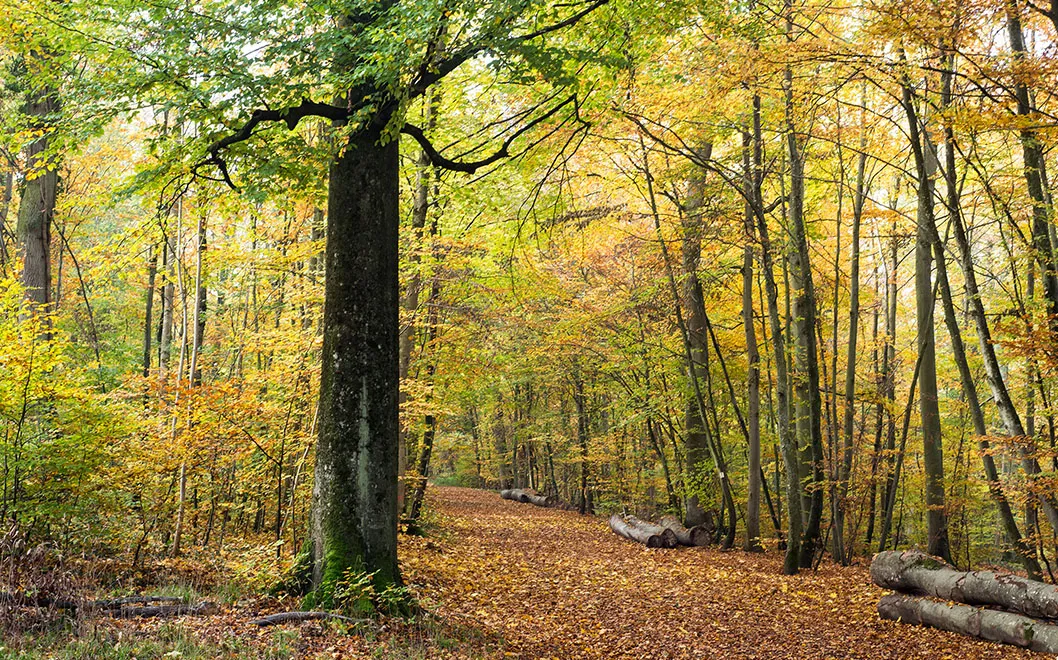
In response to growing challenges such as drought and fires, which devastated nearly 100,000 hectares this summer, the CESE is mobilizing for the preparation of the new National Forest and Wood Plan. The institution will present its proposals from civil society during the plenary session on December 9.
French forests, covering nearly one-third of the territory, are weakened by climate change. Figures from the National Forestry Office (ONF) reveal that in 2018, over 300,000 hectares of public forests experienced unprecedented mortality. This situation has halved the carbon storage capacity in ten years and could alter the appearance of half of France's forests within 50 years, affecting various species like spruce, fir, Scots pine, ash, and beech.
Despite these threats, French forests represent a significant economic, social, and environmental asset. They span 17.1 million hectares in mainland France and constitute Europe's fourth-largest forest area. They play a crucial role in regulating biogeochemical cycles, harbor important biodiversity (43% of Natura 2000 sites are forested), and support an industry with over 400,000 direct jobs in timber for construction, industry, and energy. Furthermore, they welcome over 700 million visitors annually for free leisure activities.
The PNFB, established by Article L. 121-2-2 of the Forestry Code, sets the national strategic orientations for forest policy over ten years. With the current plan ending in late 2026, the government is working on the next edition (2027-2036). Through its Declaration, the CESE aims to voice civil society's perspective, focusing on strengthening forest resilience, supporting landowners, territorializing the plan via regional programs (PRFB), balancing forest governance, addressing specific overseas issues, and preventing risks.
To develop its declaration, the CESE will hold hearings with representatives from the State services, professional organizations in the forest-wood sector, and environmental associations such as FNE, WWF, Canopée, and the IUCN. The Environment Commission, with contributions from the Spatial Planning and Economic Activities Commissions, will submit its work to the Bureau. Co-rapporteurs Olivier Soulères (Afef) and Nicolas Ribo (CGT) will present the declaration at the plenary session on December 9, 2026.