Road transport, which handles nearly 90% of goods flow in France and accounts for about 7.5% of national greenhouse gas emissions, is undergoing a transition to electric power. This shift significantly increases energy demands, as heavy goods vehicles are equipped with large-capacity batteries requiring very high charging power.
According to a forward-looking study published by Enedis in 2025, nearly 70% of the energy needed to charge electric trucks is expected to be consumed at depots and logistics platforms, where vehicles will be recharged during downtime, particularly at night. Some logistics hubs could require over 10 megawatts of electrical power by 2035, equivalent to the consumption of several thousand homes.
In Hauts-de-France, the leading logistics region, Enedis is already anticipating this demand. As of September 2026, identified projects represented nearly 80 megawatts of power and over 600 charging stations for electric heavy goods vehicles. The installation of charging points is complemented by adapting the electrical grid to supply multiple trucks simultaneously at high power levels.
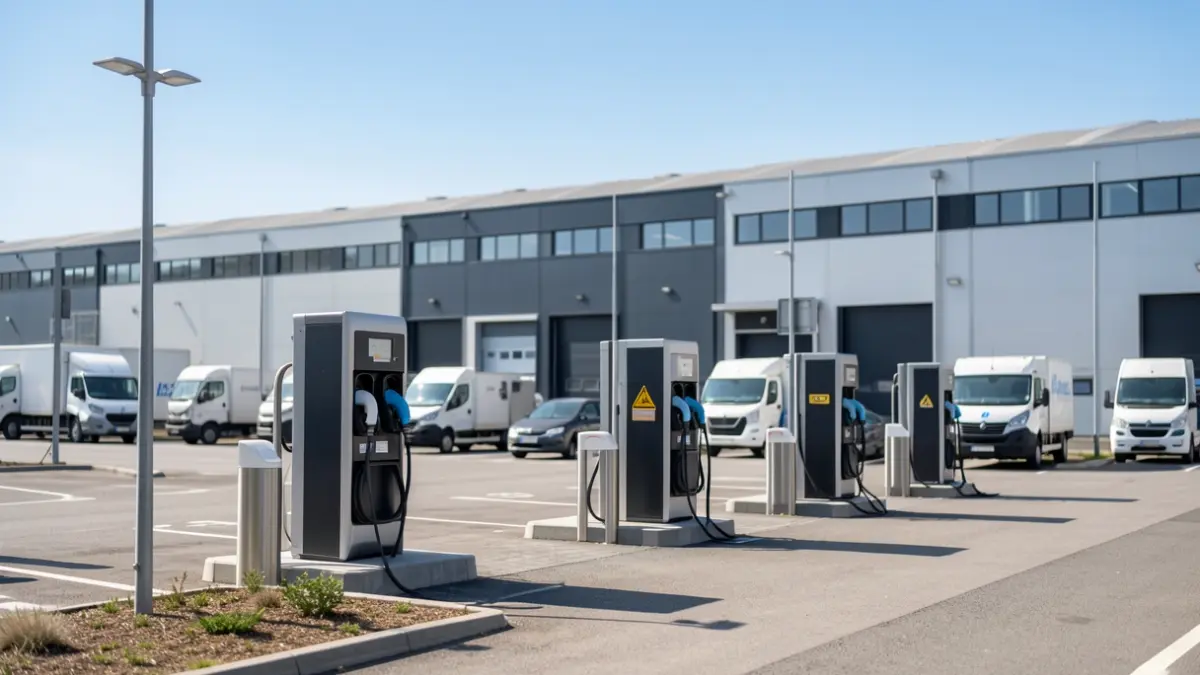
Enedis supports companies in this transition, such as at Méricourt in Pas-de-Calais, where logistics company Transports Bray has commissioned a 2-megawatt charging station with 14 chargers, capable of simultaneously recharging up to five trucks at 400 kilowatts or twenty vehicles at 100 kilowatts.
This major transformation for the logistics chain requires cooperation among transporters, local authorities, charging operators, and economic stakeholders to identify future electricity consumption zones and prepare necessary investments. The electrification of heavy goods vehicles is part of a broader evolution of electricity needs, including re-industrialization, decarbonization of industrial sites, and the development of data centers.