The publication 'Chiffres clés en Seine-et-Marne' by Seine-et-Marne ACC’tive offers a comprehensive overview of the departmental economy for 2026. Resulting from the collaboration between the Chamber of Commerce and Industry of Seine-et-Marne, the Chamber of Trades and Crafts of Île-de-France – Seine-et-Marne, and the Chamber of Agriculture of the Île-de-France Region, this document compiles data on the territory, demographics, employment, income, economic activity, trade, agriculture, crafts, foreign trade, apprenticeships, higher education, and tourism.
With 1,468,108 inhabitants in 2023, Seine-et-Marne represents 11.8% of the Île-de-France population. Its population grew by 3.9% between 2018 and 2023, a faster pace than the Île-de-France region as a whole (+2.0%). The department, spanning 5,915 km², maintains a density of 248 inhabitants per km², significantly lower than the regional average.
The economic fabric is characterized by its vitality: over 100,000 businesses were economically active in 2023. The number of legally registered active units saw an increase of 33.3% between 2018 and 2023, surpassing the regional growth (+28.0%). In 2025, 25,325 businesses were created, primarily in the services sector (72.5%).
At the end of 2025, Seine-et-Marne had 564,478 jobs, with a significant share in services (81.7% combined market and non-market), as well as in industry (8.9%) and construction (8.8%), proportions higher than the Île-de-France averages. The activity rate for 15-64 year olds was 77.4%, and the employment rate was 69.3%. The unemployment rate stood at 7.6% in the first quarter of 2026.
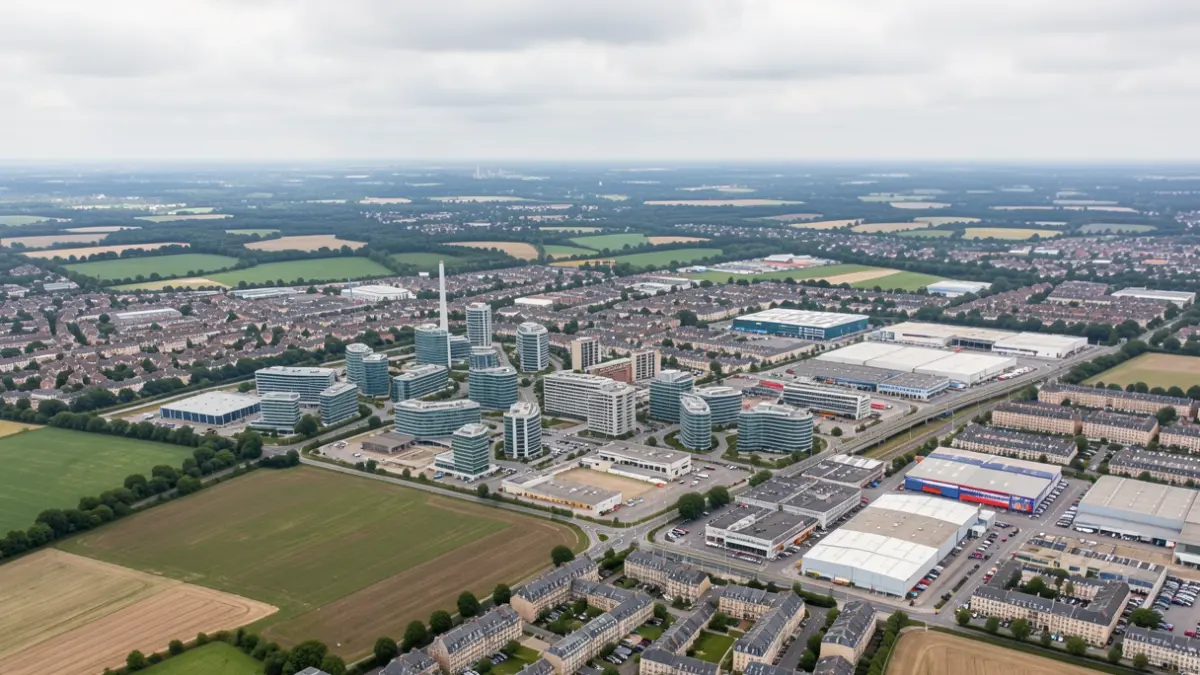
Economic activity zones play a structuring role, with 1,164 recorded in July 2026. They host approximately 28,196 establishments and 264,112 employees, particularly in transport, warehousing, trade, and industry.
Local commerce comprises 14,825 establishments as of June 2026, dominated by cafes, hotels, restaurants (20.5%) and beauty-health services (15.7%). Crafts are also well represented with 44,760 businesses in June 2026, a 3.1% increase.
Training is a driver of attractiveness: consular schools trained 3,516 apprentices by the end of 2025. The department also hosts 33,717 higher education students for the 2024 academic year, an increase of 3.4%.
This data aims to help businesses, local authorities, and economic actors understand the department's dynamics and inform their strategic decisions.