
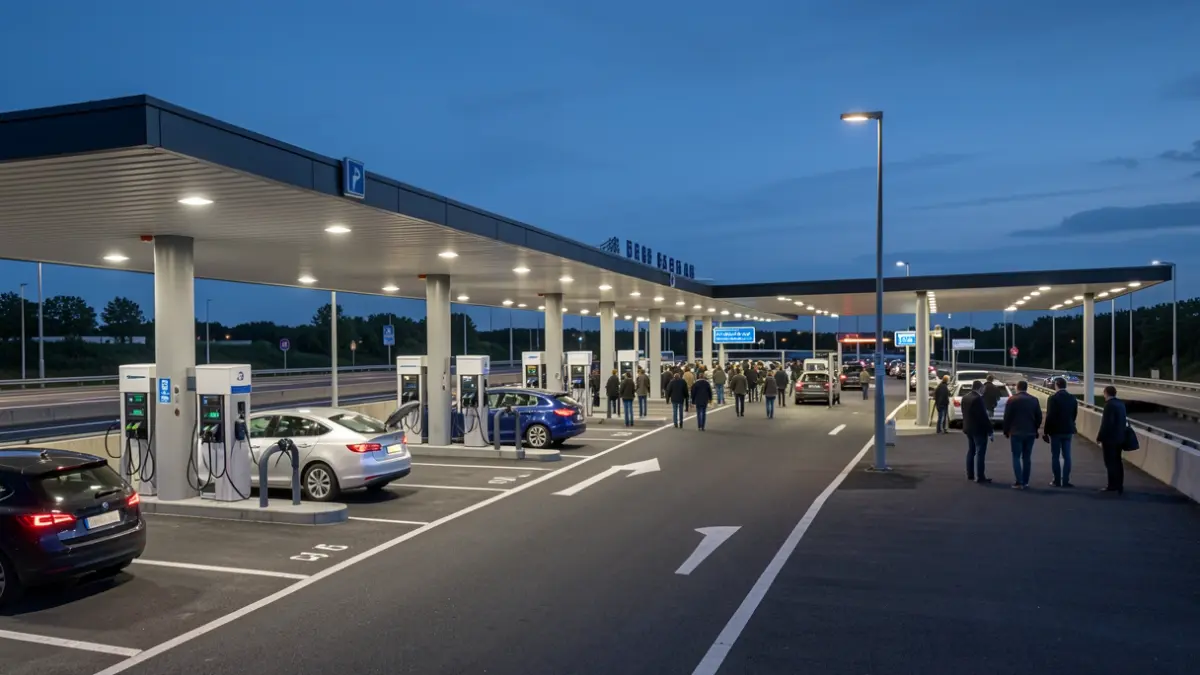
With 100% of service areas on the concession highway network equipped with electric vehicle charging infrastructure, representing 393 areas (out of 422 total in France), France is entering a new phase in the electrification of its roads. This commitment, driven by Enedis, highway concession companies (SCA), charging operators, and public authorities, is part of an ambitious partnership approach.
By 2035, the deployment of new charging points will reach a total power capacity of 4.4 GW, nearly ten times the current capacity. France, already well-positioned with over 200,000 public charging points, has seen its infrastructure double in three years. On the highway network, the total power capacity is approximately 0.5 GW, supporting the growth of electric mobility and long-distance travel.
Current government projections anticipate a significant increase in charging needs, driven by the growth of the electric light vehicle fleet and the electrification of road freight transport. The new phase announced today signals a major electrification of the national road network. By 2035, nearly 1,000 areas will need to be equipped or reinforced, reaching about 4.4 GW of installed power.
The success of this initiative relies on close collaboration between highway concession companies, charging operators, public authorities, and Enedis. This collective effort aims to anticipate long-term electrical needs, plan necessary network reinforcements, and propose the most suitable technical solutions for local specificities, thereby preparing the infrastructure required for the future development of electric mobility.