The force exerted by certain cells to counter obstacles during their movement is made possible by the structure of their skeleton, parts of which behave like wool. This mechanical property has been revealed by scientists from the CNRS, Université Paris Cité, and Université Paris-Saclay. This study, to be published on November 18 in the journal Nature, benefited from the support of the Bettencourt Schueller Foundation through the Impulscience® program.
Cells, essential for functions like wound healing and the immune system, move within the body by pushing past or deforming around obstacles. To exert the necessary forces for these movements, cells mobilize their internal skeleton, a network of microscopic filaments. Although considered rigid, the precise mechanisms of these networks remained poorly understood.
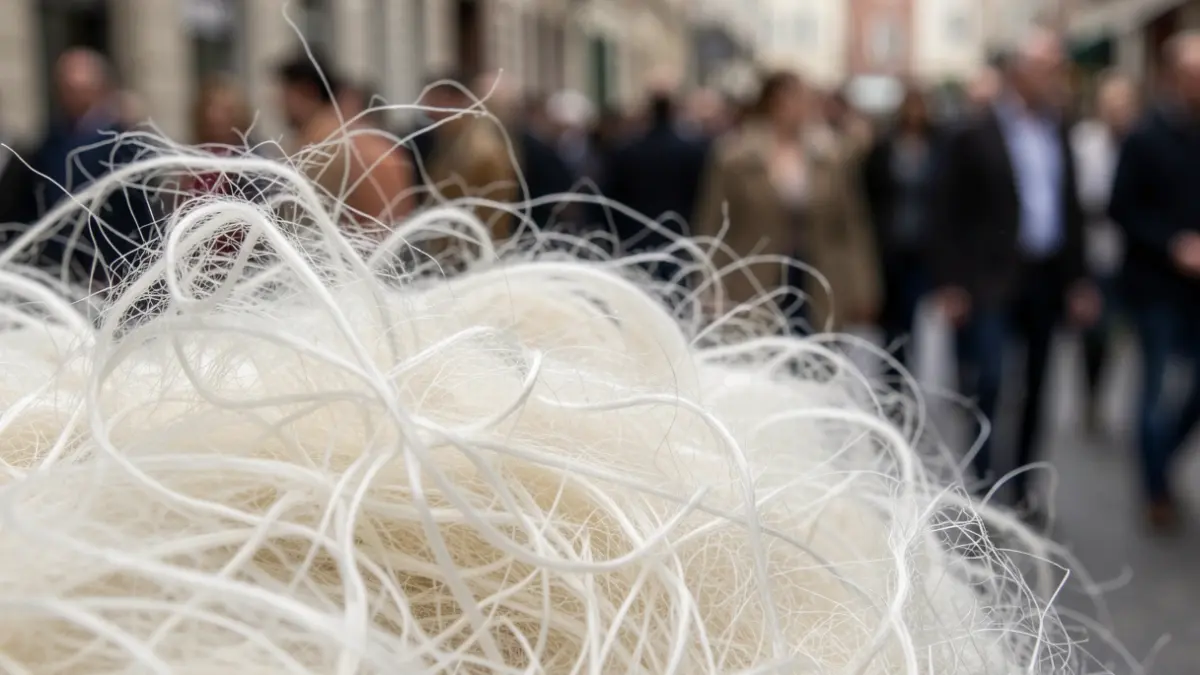
Scientists have discovered that the branched filaments constituting parts of the cell skeleton exhibit mechanical properties similar to those of sheep's wool. When compressed, the filaments intertwine, multiplying contact points and thus strengthening the overall structure. The degree of entanglement directly influences the mesh rigidity, much like a pile of loose wool compared to a heap of knitted scarves.
These findings, obtained through a combination of mathematical theory, numerical simulations, and laboratory experiments, offer new perspectives for understanding complex biological phenomena, particularly the spread of cancer cells.