The association INAÉ, dedicated to the development of Insertion through Economic Activity (IAE) in New Aquitaine, has published a regional infographic presenting the figures for 2025. These territorial data detail the number of structures, employees in pathways, and integration results.
In 2025, the region had 453 Insertion through Economic Activity Structures (SIAE). These structures supported 25,829 employees in integration pathways, representing 7,611 full-time equivalents (ETP). SIAEs are divided into several categories: Insertion Workshops and Sites (ACI) make up half of the structures, followed by Insertion Enterprises (EI) for a little over a quarter. Intermediate Associations (AI) represent about 15%, while Temporary Employment Insertion Enterprises (ETTI) and Work Integration Social Enterprises (WISE) are more minor.
ACI and EI develop their own production activities, while AI and ETTI primarily provide employee placement. Departmental infographics allow for consulting the distribution of SIAEs across the region's 12 territories.
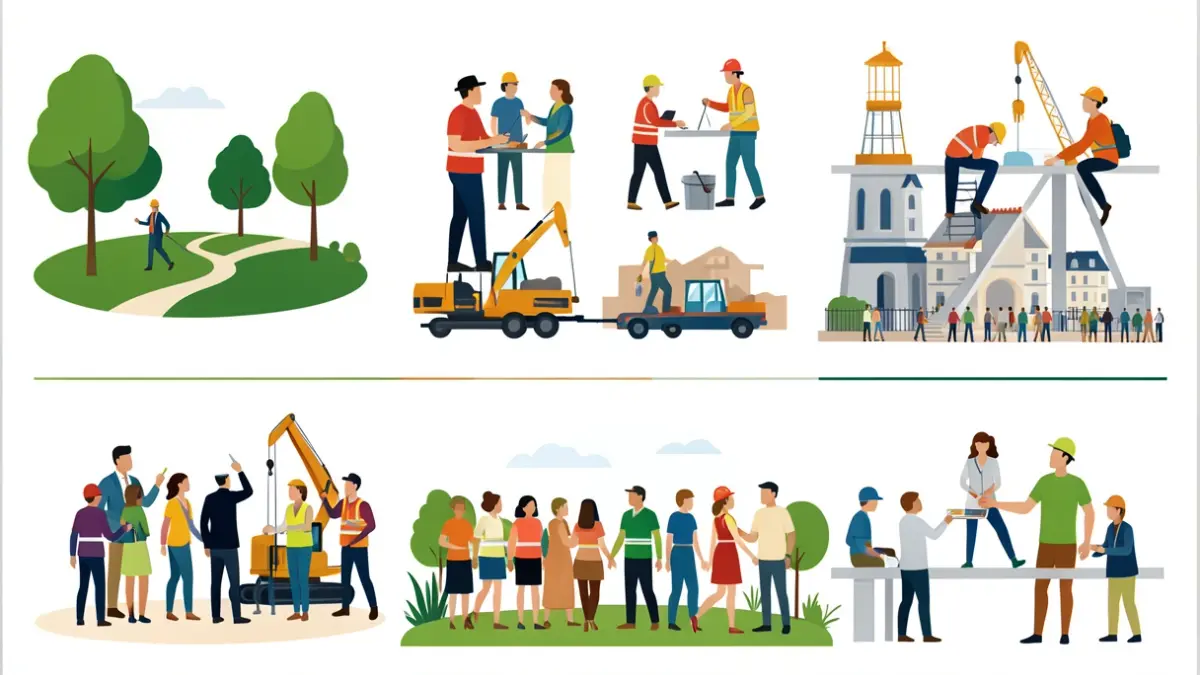
Employees in integration work in diverse sectors. Environment, maintenance, and development of green and natural spaces represent 40% of activities, ahead of building and public works (30%). Activities related to waste and cleaning also hold significant importance, alongside personal services, market gardening, commerce, and logistics.
The profile of IAE beneficiaries reveals that employees in pathways are predominantly men, aged 26 to 50. Half are long-term job seekers. Additionally, 32% receive RSA (social welfare benefit) and 16% are workers with disabilities. Nearly three-quarters have an educational qualification below the baccalaureate level.
IAE serves as a lever for sustainable employment. According to INAÉ, 57% of individuals completing a pathway find employment or training, securing lasting employment (CDI, CDD over six months) or continuing their training. The pathway also helps overcome social barriers related to mobility, health, or housing.