Marine Benoist defended her thesis titled "Implementation of processes for the fabrication of fuel cell and electrolyzer cells with textured architectures." Her research, conducted under the supervision of Pierre-Marie Geffroy, Emilie Béchade, and Anne Aimable at the IRCER laboratory in Limoges, was funded by the ANR as part of the CELCER-EHT project, linked to PEPR-Hydrogène.
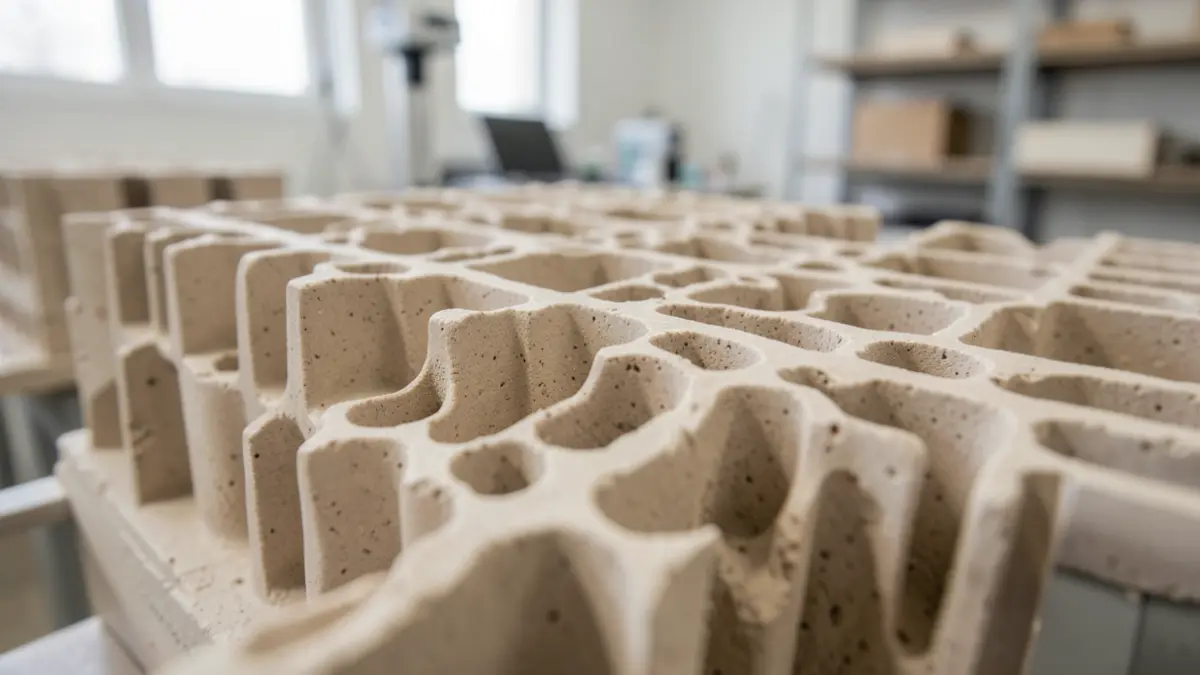
The research led to the development of an innovative process called Co-Casting coupled with Phase Inversion (CCIP). This method enables the fabrication of high-performance cells for high-temperature fuel cells or electrolyzers. The CCIP process, which has been patented, creates oriented porosity in the form of microchannels to facilitate gas diffusion within the hydrogen electrode. Results showed improved gas permeability properties of the cells without degrading their mechanical properties compared to electrodes with non-textured microstructures.
Summary of the textured microstructure obtained with the tape casting process coupled with phase inversion
Following her defense in November 2025, Marine Benoist was selected for the thesis prize by the CNRS Hydrogen Research Federation. This recognition offers her the opportunity to present her thesis work at the upcoming FRH2 plenary sessions, to be held in Bordeaux from November 02 to 06, 2026.
Currently, Marine Benoist is undertaking a postdoctoral position at the NIMS (National Institute for Materials Science) in Japan, as part of an IRL LINK project. She continues to explore other ceramic processes for applications in the decarbonized energy sector, such as fuel cells and electrolyzers.