
These initiatives, backed by the PRAAM call for projects, bring together farmers, experts, and industry companies. They aim to facilitate changes in agricultural practices and share the risks associated with reducing phytopharmaceutical product usage. These projects received a favorable opinion from the operational ministerial steering committee for Agriculture/Agri-food of France 2030 in June and July 2026.
The Pragmatic project, led by MILPA Conseil, aims to transform agronomic practices across 50,000 hectares of arable land, minimizing the use of phytopharmaceutical products. It supports farms towards agriculture focused on preserving soil fertility and life, combining agronomic advice with economic security. Practices include intercropping, permanent soil cover, and reduced tillage. The objective is to increase from 6,000 hectares committed in 2026 to 50,000 hectares, involving approximately 330 farms. The project targets a treatment frequency indicator (IFT) between 0 and 0.3.
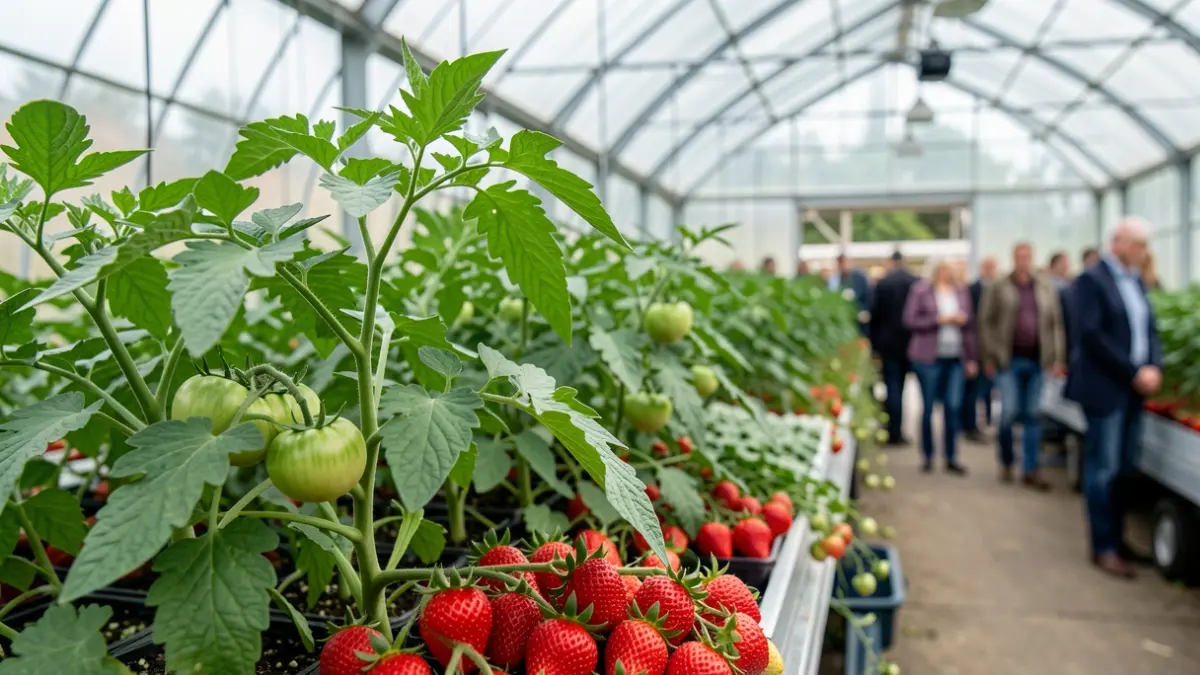
The Coop Protect project, managed by ROUGELINE, focuses on reducing phytopharmaceutical product use by 20% for 143 hectares of tomatoes, strawberries, and cucumbers grown under glass. These crops are located in Nouvelle-Aquitaine, Provence-Alpes-Côte d’Azur, and the Rhône Valley. Led by a union of six cooperatives representing 197 fruit and vegetable producer families, the project aims to advance in treatment reduction, leveraging biological protection and combining several agroecological methods. It targets a 20% decrease in the chemical IFT.
With these two projects, nearly €30 million is now committed under PRAAM, also supporting the BOLIIDE and DORIANE projects. The main challenge is to enable widespread deployment of solutions that reconcile pesticide reduction, economic performance, and resilience to risks.