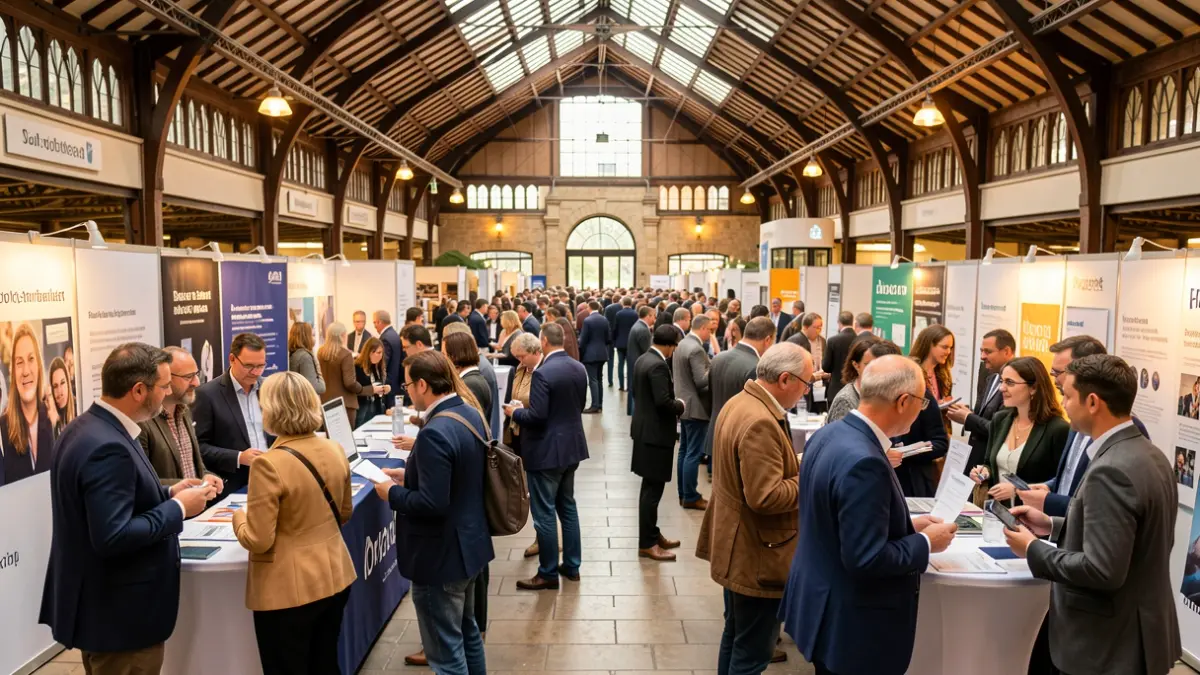
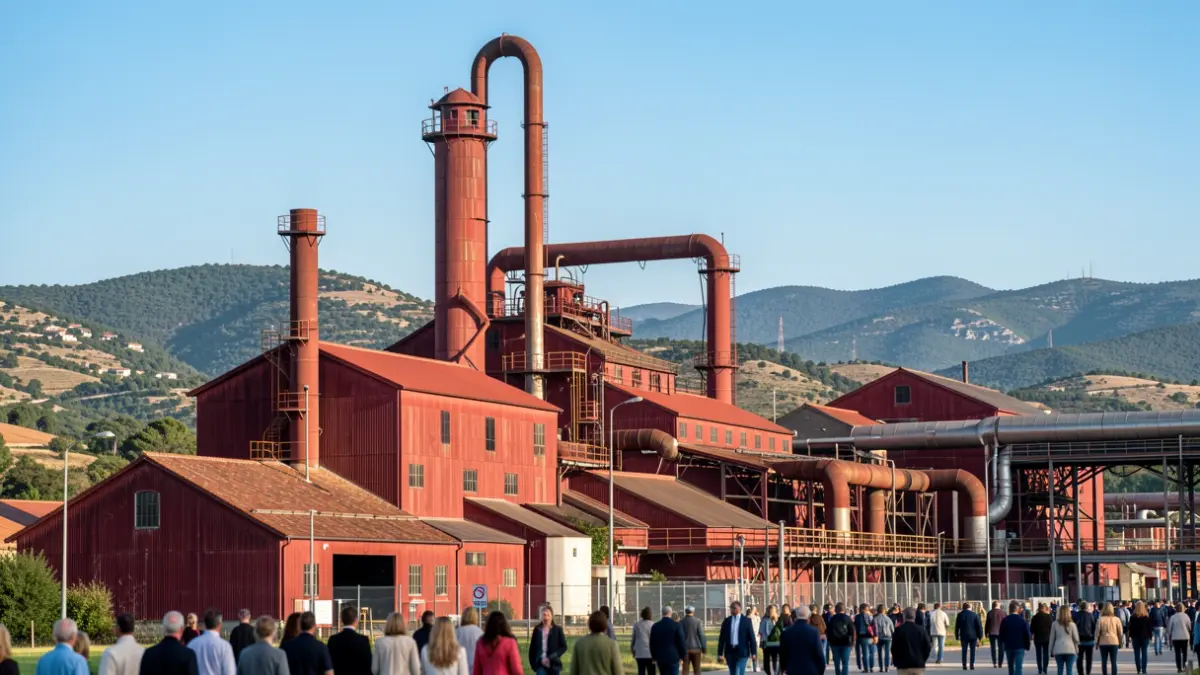
The Alteo Alumina plant, established in Gardanne for over 130 years, hosted a visit on September 22, 2026, for Les Centaures, the network of centennial companies in Aix-Marseille-Provence. This meeting provided an opportunity to discuss innovation, environmental protection, and resilience, while exploring potential future collaborations.
Alumina, an essential component found in our phone screens, eyeglass lenses, floor coatings, and hybrid car batteries, is at the core of Alteo's operations. The plant, founded in 1893 as Péchiney, was the world's first to process bauxite, discovered in Les Baux de Provence, using energy from the local coal mine. Spanning 45 hectares and crossed by the old Marseille road, its distinctive silhouette, tinged red by iron oxide, is now inseparable from the landscape of Gardanne.
About ten entrepreneurs from various sectors, including construction, hospitality, transport, and agri-food, discovered the production processes of this global leader. Within a complex structure of pipes and tanks operating 24/7, alumina is crystallized, calcined, and ground. Over the decades, products and markets have evolved significantly. "In specialty aluminas, we have the most extensive range in the world with 250 different references," stated Patrick Schneider, plant director. He noted that some of these aluminas are strategic, particularly those ensuring the containment of nuclear waste storage, crucial for power plant operations.
In response to growing environmental expectations, the company has embarked on a significant transformation. Since 2015, Alteo has completely stopped discharging "red mud" into the sea off the coast of Cassis, a practice that had been ongoing since 1966. Integration into the mining group UMSI in 2021 reinforced this shift towards "green alumina." Major investments have been made: "In five years, we have reduced our carbon footprint by 63%, notably thanks to our industrial electric boiler, which is the largest in France," detailed Patrick Schneider. The company has also decreased dust emissions by 95%, reduced water intake by 50%, and now valorizes 95% of its mineral waste. The industrial water used exits the plant with a quality comparable to river water. By 2030, Alteo Alumina aims to dismantle the pipeline that evacuated its water to Cassis.
To carry out these projects, Alteo is deconstructing some of its old facilities to build new ones. "The plant is rebuilding itself on its own foundations," noted Patrick Schneider. "In an ever-faster evolving economic environment, this is one of the things that saves us; we are always in development." With nearly 140 years of existence, Alteo Alumina is a major industrial player in the metropolis, employing 350 people directly and over 150 full-time equivalents in subcontracting. The company currently generates 87% of its 122 million euros in turnover from exports.