Led by Noémie Coulon, a researcher at UMR Marbec, in collaboration with scientists from Lirmm, this research utilizes a model trained on nearly 27,000 surveys. The tool generates multiple plausible communities under the same environmental conditions, offering a novel perspective on the organization of marine ecosystems.
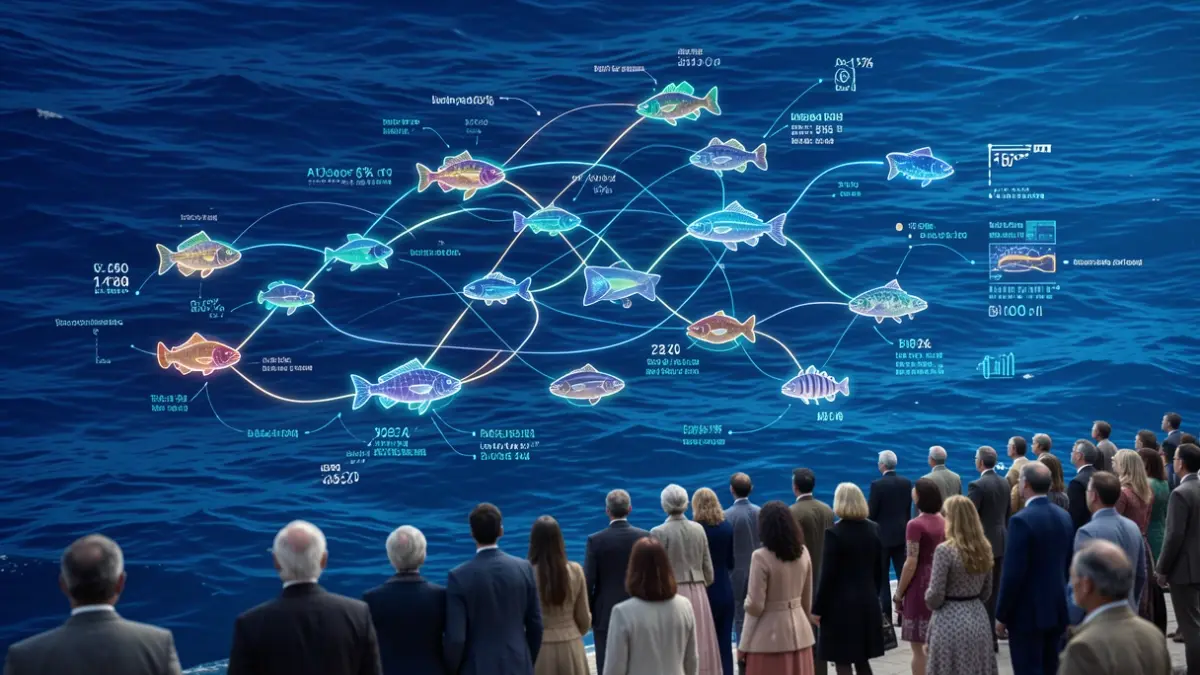
Unlike historical ecological models that predict the distribution of each species separately, this approach uses a language model to reconstruct an entire community. The model learns statistical associations between species by considering environmental context and the biomass of already generated species.
The tool allows for the exploration of different community compositions in identical environmental conditions, improving prediction compared to traditional methods. For each survey, 500 communities were generated, revealing that in about one-third of cases, these communities fall into distinct groups with unique combinations of species and biomasses.
These configurations, which can include species linked to corals or macroalgae, are not mere variations. They may represent ecologically contrasting communities, such as those associated with macroalgae and seagrasses, or those dependent on hard corals. This distinction is crucial as it can alter conservation priorities, particularly regarding the proportion of threatened species.
This approach provides an unprecedented framework for examining the hypothesis of multiple stable communities existing in nature and allows for a better representation of marine community diversity and their associated ecological functions.