
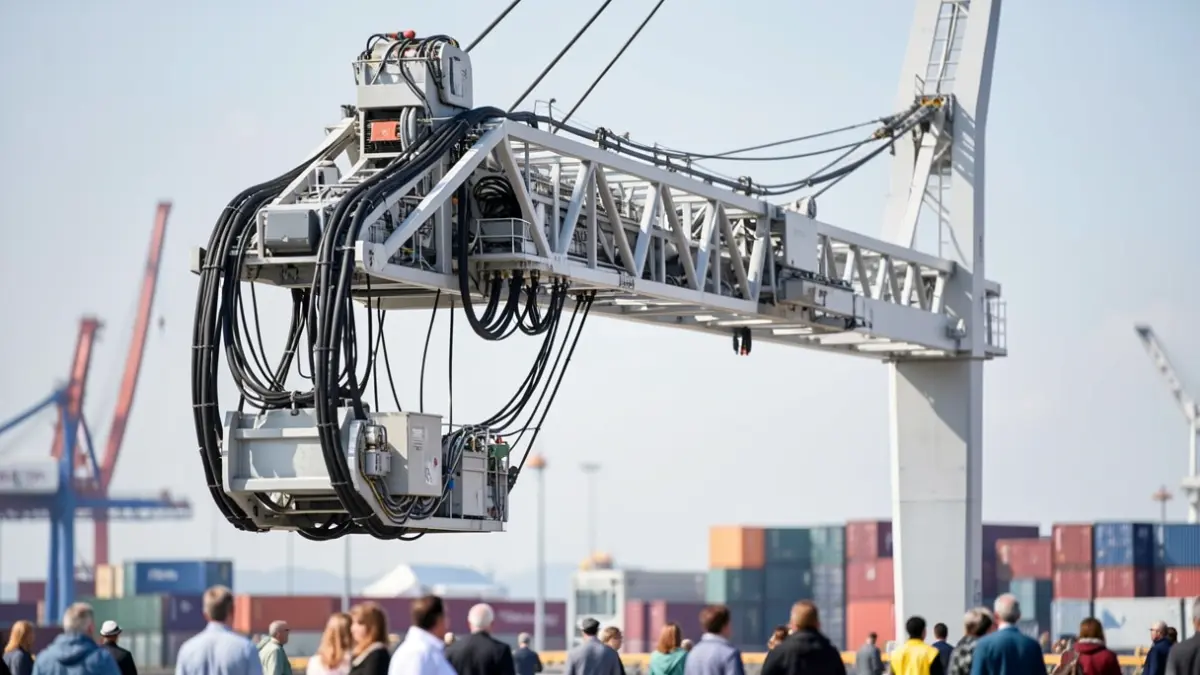
The Port of Bayonne is taking a significant step in modernizing its infrastructure with the acquisition of two electric cranes. This major investment of €12.28 million will substantially increase handling capacity at its Blancpignon – Anglet and Tarnos sites.
The new cranes, currently under manufacturing at the Liebherr factory in Rostock, Germany, are designed for enhanced performance. Lifting capacity will be quadrupled at Blancpignon and octupled at Tarnos, reaching up to 240 tonnes in tandem. Delivery is expected in December 2026, with commissioning planned for the first quarter of 2027.
Port teams, accompanied by AQUASS, a Bidart-based company specializing in the inspection of port lifting equipment, recently conducted a control visit in Rostock to validate the cranes' compliance and performance before shipment.
The transport of the cranes to Bayonne is scheduled for the first week of December, weather permitting. Liebherr is exploring the possibility of consolidating the transport with a third crane destined for South America to reduce the carbon footprint. The first crane (64 tonnes) will be unloaded at Blancpignon, and the second (124 tonnes) at Tarnos.
Upon arrival, electrical connections, final adjustments, and load tests will precede their operational deployment. A three-month observation period will follow before final acceptance. Additionally, six port employees will undergo training by Liebherr in Germany in early 2027 for maintenance and troubleshooting, thereby enhancing the teams' autonomy.