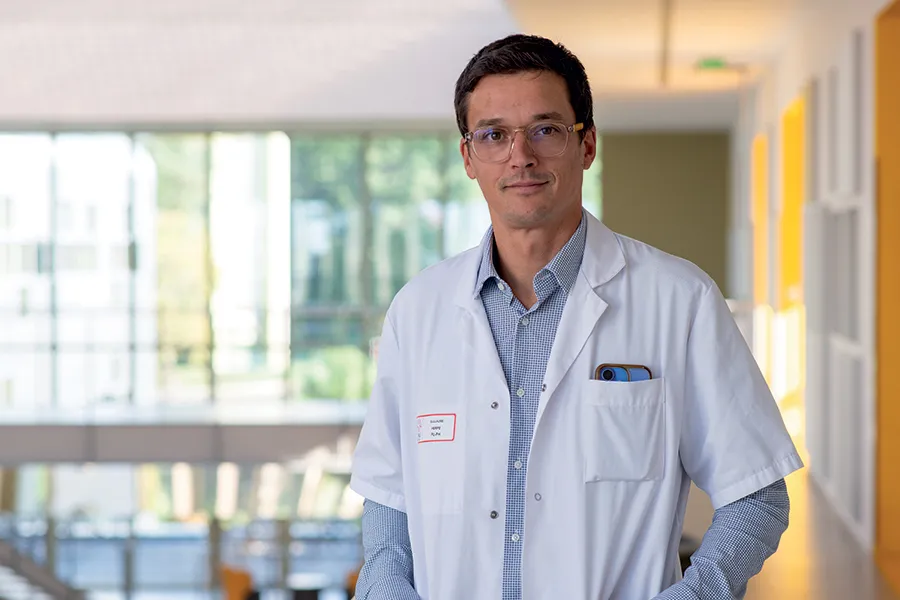
Recently appointed university professor – hospital practitioner, Guillaume Herpe, a radiologist at the Poitiers University Hospital (CHU de Poitiers), is at the forefront of deploying artificial intelligence within the institution. Recognized for his pioneering stance on new technologies, his attraction to AI is rooted in the medico-technical nature of radiology, a field undergoing constant mutation.
Radiology experiences major evolutions, moving from CT scans to MRI, and then to teleradiology. The advent of computer-assisted vision and AI marks a new phase. Guillaume Herpe emphasizes that innovation and cutting-edge tools are part of radiologists' DNA, driven by the concrete prospects they offer for practices and patients. This collective endeavor relies on close collaboration with IT teams and the department's radiologists.
Guillaume Herpe coordinates the AI steering committee at the Poitiers University Hospital. Radiology accounts for nearly 95% of the medical AI market. The challenge is to integrate AI into the patient's journey, from prioritizing exams to ensuring smooth data transmission to oncologists. The hospital aims to evaluate these tools in real-world conditions to model reproducible methods, in consultation with the Nova healthcare cooperation group (comprising the University Hospitals of Bordeaux, Limoges, and Poitiers).
The Poitiers University Hospital has acquired the Biograph Vision Quadra, a latest-generation PET/CT scanner, as well as a 7 Tesla MRI. The synergistic use of these devices will provide a comprehensive and detailed view of tissues, supporting research on digital twins. This virtual double, stored digitally, allows simulation of organ behavior under various stresses without direct patient intervention, accelerating research and ensuring complete safety for testing molecules or algorithms.